Soil Conservation

Lacombe County is blessed with an abundant and varied landscape of very productive soils. Under the Soil Conservation Act, it is an offence for landowners to allow soils to degrade either by wind or water erosion. While wind erosion is not a frequent problem in Lacombe County, water erosion can cause major land degradation.

The Act imposes a duty upon every landholder to take appropriate measures to prevent soil loss or deterioration or to mitigate the same where it has occurred. Where a breach of said duty occurs, the landholder may be served with a notice directing him or her to take remedial action within a specified time – usually 30 days. 

If the landholder fails to comply with the directions given in the notice, a person authorized by the local authority may enter upon the land and take remedial action at the landholder's expense. If the local authority does not take appropriate actions then the Minister can appoint an officer with the authority to do so. The legislation also provides appeal and dispute settlement mechanisms.

For more information, contact Community Services. We can assist in planning for shelterbelts and grassed waterways to help alleviate some of these problems.

Soil Erosion | Water & Wind Erosion

Soil erosion is a gradual process that occurs when the impact of water or wind detaches and removes soil particles, causing the soil to deteriorate. Soil deterioration and low water quality due to erosion and surface runoff have become severe problems worldwide. The problem may become so severe that the land can no longer be cultivated and must be abandoned. This is a good reminder to protect our natural resources.

Erosion can be a serious problem for productive agricultural land and for water quality concerns. Controlling the sediment must be an integral part of any soil management system to improve water and soil quality. Eroded topsoil can be transported by wind or water into streams, other waterways, municipal ditches and degrade right-of-way contour. Sediment is a product of land erosion and derives largely from sheet and rill erosion from upland areas, and to a lesser degree, from cyclic erosion activity in gullies and drainage ways.

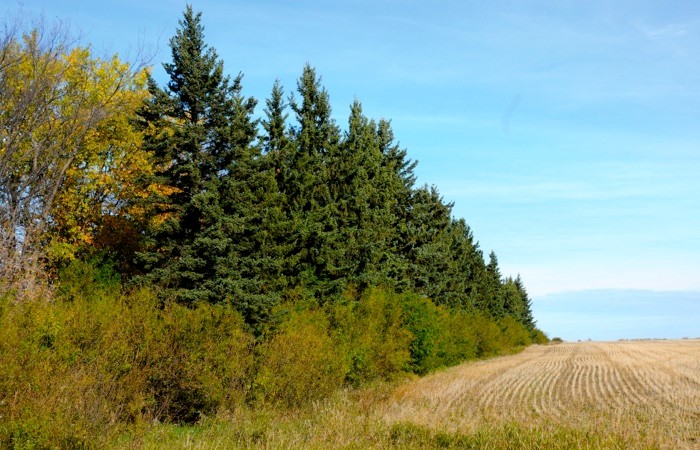
Shelterbelts and their role in preventing soil erosion

With the current weather pattern shift, we are continuing to see higher-level winds, and one of the best ways to combat this is by establishing shelterbelts.

A shelterbelt is a barrier of trees or shrubs. The term “field shelterbelt” is used to distinguish between rows of trees or shrubs on agricultural fields from those planted in other ways: around farmyards or livestock facilities (farmstead shelterbelts), on marginal lands to change land use or in block plantings to provide woodlots or wildlife habitat.

Although modern agricultural farming practices such as direct-seeding have greatly reduced the amount of wind erosion in Alberta, there continues to be some effects of wind erosion on Alberta soils each year. Eroded soils are less productive, require higher inputs for crop production and are more prone to further erosion than uneroded soils. Erosion results in damage to downwind crops, structures and buildings, requiring costly cleanup and repair. Blowing topsoil has also been cited as a concern in numerous vehicle accidents, with several resulting in personal injury. Properly designed field shelterbelts, as part of a crop management system approach, prevent or greatly reduce the risk of wind erosion.

Benefits of Shelterbelts

Properly placed field shelterbelts provide agronomic and other benefits. The main agronomic benefits include the following:

  • reduced soil erosion by wind
  • increased moisture for crop growth due to two factors: – snow trapping – reduced moisture loss through evaporation
  • potential for increased crop yields
  • reduced wind damage to crops

Other benefits:

  • provide wildlife habitat and shelter for livestock.
  • Improve safety in winter travel due to reduced snow drifting.
  • Lower costs of snow removal from roads.
  • Beautification of the prairie landscape.
  • Reduced environmental effects of agriculture by maintaining groundwater balance and protecting watersheds.
  • Provide a potential source of income for farmers (e.g. biomass, timber, berries, firewood and non-timber products).

Interested in Establishing a Shelterbelt?

Prairie Shelterbelt Program Ltd.

(403) 507 - 8340

Help International Shelterbelt Centre

(306) 861 - 0814 or (306) 842 -2433

Tree Time

1-844-873-3700

Contact Us

Mailing Address:
Lacombe County Office
RR 3
Lacombe AB T4L 2N3

Physical Location:
40403 Range Road 27-4

Contact Us
Monday - Friday
8:00 a.m.- 4:30 p.m.

Email: info@lacombecounty.com 
Phone: 403-782-6601
Fax: 403-782-3820

Stay informed!

Subscribe to receive news updates or follow us on social media to stay up to date on the County's activities, events, and operations.